There is a reason brokerage firms are legally required to give new margin account holders a risk disclosure document before they place their first leveraged trade. Margin trading is one of the most powerful tools available to U.S. retail investors — and one of the most dangerous when used without a thorough understanding of the mechanics.
This guide explains exactly how margin trading works in the United States: the regulations that govern it, the numbers that matter, what happens when a trade goes wrong, and who this tool is actually designed for.
Check out More at Peakmindspaths
What Is Margin Trading?
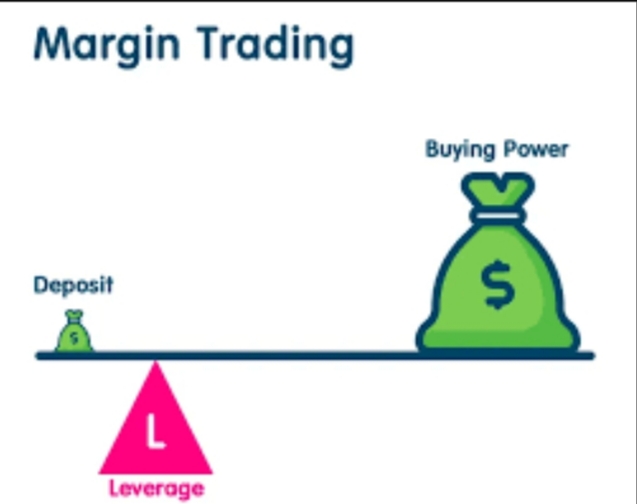
Margin trading is the practice of borrowing money from your brokerage firm to purchase securities, using the assets already in your account as collateral. The borrowed funds are called a margin loan, and the difference between the total value of your securities and the amount you have borrowed is your equity.
The fundamental principle is straightforward: leverage amplifies both gains and losses. If you buy $20,000 worth of stock using $10,000 of your own money and $10,000 borrowed from your broker, and the stock rises 20%, your $4,000 gain represents a 40% return on your actual capital. If the same stock falls 20%, your $4,000 loss is also a 40% hit to your equity — not 20%.
That asymmetry is the essential truth of margin trading. It does not change your probability of being right. It changes the financial consequence of being wrong.
Margin Account vs. Cash Account: The Fundamental Distinction
When you open a brokerage account, you have two options:
Cash account: You can only buy securities using money you actually have in the account. Settlement is typically T+1 (one business day), and you cannot sell short or access leverage. This is the appropriate account for most retail investors.
Margin account: Your brokerage extends you a line of credit secured by the securities in your account. You can buy more than you have in cash, sell short, and access features unavailable in a cash account. In exchange, you take on the risks that come with leverage — and you pay interest on whatever you borrow.
Some brokerage firms default to margin accounts at opening. Read your account agreement carefully to understand what type of account you have.
The Regulatory Framework: Regulation T and FINRA Rule 4210
Margin trading in the U.S. is governed by two overlapping regulatory frameworks:
Federal Reserve Regulation T (Reg T) sets the initial margin requirement — the maximum percentage of a securities purchase that a broker can lend. Under current Reg T rules, brokers can lend investors up to 50% of the total purchase price of eligible equity securities. This means if you want to buy $20,000 of stock on margin, you must put up at least $10,000 of your own capital. You can borrow the remaining $10,000.
Not all securities are marginable. Penny stocks, IPOs for 30 days, and certain volatile securities are typically ineligible. Check your broker’s marginalable securities list.
FINRA Rule 4210 sets the ongoing maintenance margin requirement — the minimum equity level your account must maintain after purchase. FINRA requires maintenance margin of at least 25% of the total current market value of your margin securities. Most brokerages set their own maintenance requirements higher — commonly 30% to 40% — which is allowed under the rules.
Minimum margin to open a margin account: Under FINRA rules, you must deposit a minimum of $2,000 (or 100% of the purchase price, whichever is less) before placing your first leveraged trade.
2026 Rule Change: FINRA Replaces the Pattern Day Trader Designation
This is a significant development that many active traders are not yet aware of.
Effective June 4, 2026, FINRA is replacing the existing Pattern Day Trader (PDT) rules with new intraday margin requirements — a meaningful structural change to how U.S. day trading works.
Under the old rules:
- Traders who executed four or more day trades within five business days were designated “Pattern Day Traders” and required to maintain a minimum of $25,000 equity in their account
- Violating this requirement resulted in trading restrictions
Under the new rules (effective June 4, 2026):
- The $25,000 minimum equity requirement for day trading is eliminated
- The PDT designation based on trade count is eliminated
- Instead, traders must maintain a minimum equity level of 25% of the current market value of long margin-eligible securities throughout the entire trading day — not just at end of day
- Firms will monitor accounts in real time or via end-of-day computation
- Repeated failure to address an intraday margin deficit can result in a 90-day restriction from creating new debit balances
Brokerages have an 18-month transition period (through October 20, 2027), so some firms may continue operating under old rules during the transition. Verify with your specific broker which framework currently applies to your account.
How Margin Lending Works: The Numbers
Here is a clear, step-by-step illustration of a margin trade:
Setup:
You deposit $10,000 into your margin account. Under Reg T (50% initial margin), you have purchasing power of $20,000 — your $10,000 plus $10,000 borrowed from your broker.
You buy $20,000 worth of Stock A at $50 per share (400 shares).
Your starting position:
- Total position value: $20,000
- Your equity: $10,000
- Margin loan (what you owe the broker): $10,000
- Current equity percentage: 50%
Scenario 1 — Stock rises to $60 (+20%):
- Total position value: $24,000
- Margin loan: $10,000 (unchanged)
- Your equity: $14,000
- Return on your $10,000 capital: +40%
- Without leverage, a 20% gain on $10,000 would yield $2,000. With leverage, you earned $4,000.
Scenario 2 — Stock falls to $40 (-20%):
- Total position value: $16,000
- Margin loan: $10,000 (unchanged)
- Your equity: $6,000
- Return on your $10,000 capital: -40%
Scenario 3 — Stock falls to $33 (-34%):
- Total position value: $13,200
- Margin loan: $10,000
- Your equity: $3,200
- Equity as percentage of total position: 24.2%
- This is below the 25% FINRA maintenance minimum — you will receive a margin call
The Margin Call: What It Is and Why It Matters
A margin call is a demand from your broker to restore your account equity to the required maintenance level. When your equity drops below the maintenance threshold, you must either:
- Deposit additional cash to bring the equity back above the requirement
- Deposit additional securities (marginable) to increase collateral
- Sell positions to reduce the loan balance and restore the equity ratio
What most investors do not realise: Your broker is not required to notify you before acting. Under most margin agreements, the broker can liquidate positions in your account at any time, without your consent and without prior warning, to eliminate a margin deficiency. They do not have to wait for the market to recover. They do not have to wait for you to respond. They will sell your holdings at whatever the market price is at that moment.
This is the most dangerous aspect of margin trading for investors who do not monitor their positions actively. Forced liquidation almost always happens at the worst possible time — when prices are already depressed — permanently crystallising losses that a patient cash investor could have simply held through.
The Cost of Borrowing
Margin interest is not free. Your broker charges interest on the margin loan from the day you borrow until the day you repay it. Rates vary significantly by broker and by the amount borrowed:
- Interactive Brokers: Historically among the lowest margin rates for retail investors, often in the 5–7% annualised range for larger accounts
- TD Ameritrade/Schwab, E*TRADE, Fidelity: Typically charge 8–12%+ for smaller balances
- Most major retail brokerages: Rates often range from 10–13%+ for balances under $25,000
Interest accrues daily and is typically charged monthly. On a $10,000 margin loan at 10% annual interest, you pay approximately $83 per month. Over a year, that is $1,000 in interest cost — meaning your position needs to gain more than 1,000 before you break even relative to buying with cash.
For short-term trades, margin interest may be negligible. For positions held weeks or months, the interest cost becomes a meaningful drag on returns.
Who Should (and Should Not) Use Margin
Margin is appropriate for:
- Experienced investors with a thorough understanding of the mechanics and a disciplined risk management framework
- Short-term positions where the thesis is specific and the exit criteria are clear
- Traders with sufficient cash reserves to meet margin calls without liquidating positions at a loss
- Investors who monitor positions actively and respond quickly to changes in equity levels
Margin is not appropriate for:
- Beginning investors still learning the fundamentals of security analysis
- Long-term buy-and-hold strategies where daily equity fluctuations are not monitored
- Anyone who cannot afford to lose more than they invest
- People trading based on tips, social media momentum, or without a clear risk framework
The leverage that makes a strong trade more profitable makes a poor trade catastrophic. Most retail margin accounts that suffer major losses do so not because of one bad trade but because of a combination of overleverage, insufficient cushion, and failure to act decisively when a margin call arrives.
Key Margin Terms Glossary
| Term | Definition |
|---|---|
| Initial Margin | The minimum amount of equity you must contribute to open a leveraged position (50% under Reg T) |
| Maintenance Margin | The minimum equity percentage your account must maintain at all times (25% minimum per FINRA; most brokers require 30-40%) |
| Margin Call | A demand from your broker to deposit funds or sell securities to restore equity above the maintenance level |
| Buying Power | The total amount of securities you can purchase, combining your cash and available margin |
| Margin Loan | The amount borrowed from your broker to fund the purchase |
| Equity | The current market value of securities in your account minus the amount of the margin loan |
| Reg T | Federal Reserve regulation setting the 50% initial margin requirement |
| Pattern Day Trader (PDT) | Designation being phased out by FINRA effective June 4, 2026, to be replaced by intraday margin requirements |
The Bottom Line
Margin trading is a tool — not a strategy. Used with precision and discipline by investors who fully understand the mechanics, it can amplify returns on well-researched positions. Used recklessly, it destroys capital faster than almost any other mechanism available to retail investors.
The regulatory framework exists for good reason. Before you use margin, understand Regulation T, know your broker’s maintenance requirements, calculate exactly what stock price movement would trigger a margin call on any given position, and ensure you have the cash reserves and the temperament to manage forced liquidation risk.
The SEC and FINRA both publish extensive investor education resources on margin trading. Reading them before you open a margin account is not optional — it is essential.
Official resources:
- SEC Investor Bulletin on Margin Accounts: investor.gov
- FINRA Margin Rules: finra.org/investors/insights/intraday-margin-requirements
- FINRA Rule 4210: finra.org/rules-guidance/rulebooks/finra-rules/4210
This article is for educational purposes only. It does not constitute financial, investment, or legal advice. All investing involves risk. Margin trading involves additional risk, including the potential loss of more than the amount invested. Past performance is not indicative of future results. Consult a licensed financial professional before making investment decisions.
Related
Options Trading Explained
Best AI Tools to Manage Your Money in 2026: Budgeting, Investing, and Planning — Honestly Compared