For most of the past 15 years, the answer to “saving vs investing” was almost embarrassingly simple. UK savings rates were barely above zero. Inflation was quietly eroding purchasing power. Anyone leaving significant money in cash for years was effectively losing wealth in real terms. The case for investing was overwhelming.
In 2026, things are more nuanced — and that makes the question genuinely worth thinking through.
The best cash ISAs are currently offering inflation-busting rates of up to 4.65%, and the Bank of England base rate stands at 3.75% as of April 2026. Savers are earning meaningful, real returns on their cash for the first time in a long time. But has saving actually caught up with investing as a wealth-building strategy? And what should you actually be doing with your money in 2026?
The answer depends on one thing above everything else: time.
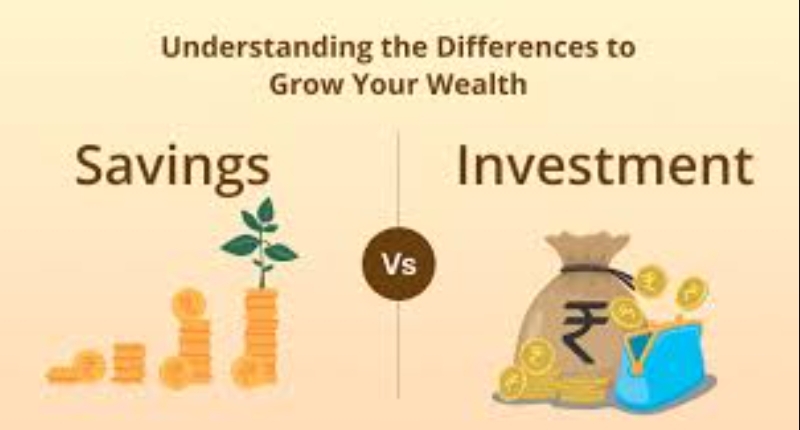 What Saving Actually Gives You
A savings account is a loan you make to a bank. The bank pays you interest. Your original capital is guaranteed — you will always get back what you put in. The FSCS (Financial Services Compensation Scheme) protects your money up to £120,000 with a single institution, giving savers genuine protection even if a bank fails.
What the best UK savings rates look like right now (April 2026):
The best easy-access cash ISA accounts allowing penalty-free withdrawals offer 4.3% interest. Savers who don’t need to access their cash can earn 4.65% by placing it in a one-year or two-year fixed ISA, or earn up to 4.55% with a three-year fixed ISA.
On £10,000 in a best-buy easy-access account at 4.3%, you earn approximately £430 per year. On a fixed 1-year bond at 4.65%, you earn £465. These are genuinely useful returns — and a radical improvement from the 0.1% rates savers endured between 2009 and 2021.
The critical limitation everyone must understand: savings rates follow the Bank of England base rate. The base rate has already fallen from its 5.25% peak to 3.75%, and savings rates have followed. If inflation continues to ease and the Bank of England cuts further, today’s 4.65% rate becomes tomorrow’s 3% or 2%. Savings rates have grown steadily since early March 2026, with uncertainty about whether the Bank of England could raise the base rate again if oil and gas disruptions drive up inflation — but savers must be vigilant and monitor rates regularly.
You cannot count on 4.65% persisting for five years. You can count on the stock market still existing in five years.
What Investing Actually Gives You
When you invest, you buy ownership stakes in real businesses — companies with revenues, products, employees, and pricing power. Over time, those companies grow, pay dividends, and their value increases. Unlike savings, there is no capital guarantee. Markets fall, sometimes sharply. But across every significant 10-year period in UK and global market history, diversified equity investors have generated positive real returns.
Check out More at Peakmindspaths
What the historical numbers actually look like:
The FTSE All-World index — tracking thousands of companies across the globe — has delivered annualised total returns (including dividends reinvested) of approximately 8–10% per year over long historical periods. Past performance does not guarantee future returns. But here is what the compounding difference looks like between competitive savings and historical investment returns:
| Time Period | £10,000 saved at 4.5% | £10,000 invested at 8% average |
|---|---|---|
| 5 years | £12,462 | £14,693 |
| 10 years | £15,530 | £21,589 |
| 20 years | £24,117 | £46,610 |
| 30 years | £37,453 | £100,627 |
The 30-year gap on a single £10,000 is £63,174 — and this assumes savings rates stay at today’s unusually competitive 4.5%, which they will not. In reality, savings rates will decline as the base rate normalises. The real gap widens significantly.
This is how wealth is actually built. Not by earning a slightly higher interest rate. By owning productive assets that compound over decades.
The Hidden Enemy: Inflation
Both savings and investing must be measured against inflation — the rate at which prices rise and purchasing power falls. An interest rate that sounds good in isolation may deliver very little in real terms.
UK CPI inflation peaked above 11% in October 2022 and has since moderated. Savings rates in the UK have risen dramatically since 2022, with the Bank of England’s base rate climbing from 0.1% to a peak of 5.25%. Today’s 4.65% fixed ISA rate is genuinely ahead of current inflation — meaning savers are building real purchasing power. That is a meaningful change from recent years.
But here is the long-run reality: over any decade-long period, equities have historically outpaced inflation by a far wider margin than savings accounts. Companies raise their prices when inflation rises. They pass costs to consumers. Their earnings, and therefore their share prices, tend to grow in line with or above inflation over long periods. Cash, by contrast, earns whatever rate the Bank of England sets — which has historically averaged significantly below equity returns.
For short-term money, the current savings rate environment is excellent. For money whose job is to build genuine long-term wealth, the same logic that has applied for 100 years still applies: ownership of productive assets, held long enough, produces superior outcomes.
The Upcoming ISA Rule Change You Must Know
The Cash ISA limit will be slashed to £12,000 for under-65s from April 2027. This is a significant policy change. From next year, under-65s who want to use the full £20,000 annual ISA allowance will need to invest at least £8,000 of it in a Stocks and Shares ISA rather than holding all £20,000 in cash. Those wishing to take advantage of the full £20,000 allowance will need to invest at least £8,000 in a stocks and shares ISA.
The government’s intention is explicit: to direct more UK household savings into the stock market, particularly UK equities. If you are currently using your entire £20,000 allowance in a Cash ISA, your ability to do so ends in April 2027. This makes 2026/27 the last full tax year to maximise the current Cash ISA allowance — and it makes the question of saving vs investing more urgent than it has been in years.
The current ISA allowance for 2026/27 is £20,000. You can now split this across multiple ISAs in the same tax year — a rule change from April 2024 that gives significantly more flexibility to use both a Cash ISA for short-term goals and a Stocks and Shares ISA for long-term investing simultaneously.
The Decision Framework: Which Money Goes Where
Saving and investing are not in competition. They serve different purposes. The question is matching the right vehicle to the right money.
Put Money in Savings If:
It is your emergency fund. Three to six months of essential expenses must stay in an instant-access savings account at all times — regardless of interest rates, market conditions, or investment opportunities. Top easy-access accounts offer around 4.5–5%, meaning a £10,000 emergency fund earns you £450–£500 per year simply by parking it in the right account. This money is not an investment. It is insurance.
The time horizon is under 3 years. If you are saving for a house deposit, a car, a wedding, a planned expense — anything with a specific date within three years — keep it in savings. Markets can fall 20–40% in short periods. You cannot afford that risk when the money has a defined near-term purpose.
You carry high-interest debt. Paying off a credit card at 20% APR is a guaranteed 20% return. No savings account or investment reliably beats this. Clear high-interest debt before directing money into either savings or investments.
Put Money in a Stocks and Shares ISA If:
The time horizon is 5+ years, ideally 10+. This is the most important criterion. Over any 10-year period in UK and global market history, a diversified, low-cost index fund held inside an ISA has overwhelmingly produced positive returns — even through the 2008 financial crisis, the COVID crash, and every other major market disruption.
You are building for retirement. Retirement is typically a 20–40 year time horizon from a working adult’s perspective. Over those timeframes, the compounding advantage of equities over cash savings is not marginal. It is transformative.
You want inflation protection over the long run. Real companies with real earnings and pricing power have historically outpaced inflation over long periods. Cash savings only outpace inflation when interest rates are set above the inflation rate — which is not always the case, and which you cannot guarantee will persist.
Where Each Type of Money Belongs in 2026
Here is a clean, practical framework:
Layer 1 — Emergency fund: Best easy-access Cash ISA or savings account, currently up to 4.3–4.61% AER. Fully liquid, FSCS protected.
Layer 2 — Short-term goals (1–3 years): Best fixed-rate Cash ISA, currently up to 4.65% on 1–2 year terms. Lock in today’s rates before they fall further.
Layer 3 — Medium and long-term wealth (5+ years): Stocks and Shares ISA invested in a globally diversified, low-cost index fund. Start monthly contributions and automate them.
Layer 4 — Retirement: Workplace pension (maximise employer match first) then SIPP contributions if higher-rate tax relief applies.
The Most Common Mistakes
Keeping long-term money in cash “until the market settles.” Markets never settle — there is always a reason to wait. People who waited for markets to feel safe in 2009, 2020, and 2022 missed some of the strongest recovery rallies in history. If you’ve got cash you can afford to set aside for at least five years, investing will often outperform savings.
Not switching to a better savings rate. Many banks are still paying as little as 2–3% on instant-access savings accounts even while the best rates on the market sit at 4.5%+. If your rate is below 4%, consider moving your money. Switching takes 15 minutes and could add hundreds of pounds annually for zero risk.
Confusing “I might need this money” with “I will need this money.” Most people could invest a portion of their savings they never actually access — but they hold all of it in cash as a psychological safety net. Be honest about how much you genuinely need available and invest the rest.
Ignoring the compounding effect of fees. A 1% annual platform fee versus a 0.15% fee on a £50,000 portfolio over 20 years at 8% average returns represents approximately £30,000 in foregone wealth. Use low-cost index funds inside your ISA.
The Honest Bottom Line
In April 2026, UK savings rates are the best they have been in 15 years. If you have short-term money sitting in an old account paying 1–2%, switching it to a 4.65% fixed ISA is one of the simplest financial improvements you can make right now.
But for money you will not need for five years or more — the money whose job is to build real, lasting wealth — the historical evidence accumulated over more than a century points clearly and consistently in one direction: ownership of productive assets, diversified globally, held for the long term inside a tax-sheltered ISA, compounded without interruption.
Save intelligently for the short term. Invest consistently for the long term. Use the ISA system to shelter both from tax. Act before the Cash ISA allowance changes in April 2027.
Official resources:
- MoneyHelper (free UK financial guidance): moneyhelper.org.uk
- FSCS protections: fscs.org.uk
- ISA rules: gov.uk/individual-savings-accounts
- FCA register of authorised firms: register.fca.org.uk
This article is for educational purposes only. It does not constitute financial advice. Investments can fall in value. Cash savings up to £120,000 per person per FCA-authorised institution are protected by the FSCS. Savings rates are sourced from MoneyWeek, MoneySavingExpert, Which? and money.co.uk (April 2026) and are subject to change. Tax rules and ISA allowances are subject to change. Consult an FCA-regulated financial adviser for advice specific to your circumstances.
RELATED
Private Credit Funds Explained: How Accredited Investors Earn 8–12% Annually
HELOC vs Home Equity Loan: Which Is Better for Debt Consolidation in 2026?