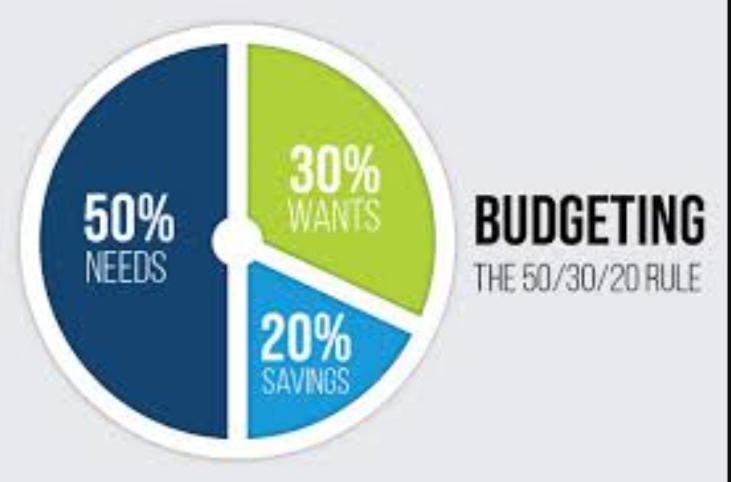
Most budgeting systems fail for the same reason: they demand too much. They ask you to track every coffee, categorise every transaction, and maintain a 47-line spreadsheet you will abandon by February. The 50/30/20 rule takes a fundamentally different approach — and that is exactly why it has become the most widely recommended budgeting framework in personal finance.
Check out More at Peakmindspaths
It gives your money a job using just three numbers: 50, 30, and 20.
No spreadsheet required. No obsessive transaction tracking. Just three clear boundaries that, if respected consistently, build financial stability over time. This guide explains exactly how the rule works, what belongs in each category, what it looks like with real numbers at different income levels, and — critically — when the standard percentages need to be adapted to fit your actual life.
Where the Rule Came From
The 50/30/20 rule was popularised by Senator Elizabeth Warren and her daughter Amelia Warren Tyagi in their 2005 book All Your Worth: The Ultimate Lifetime Money Plan. The book was written in response to a pattern Warren observed in her decades of research on household bankruptcy: most families in financial distress were not brought down by irresponsible spending on luxuries. They were brought down by excessive fixed costs — housing, car payments, insurance — that consumed too much of their income, leaving no cushion when anything unexpected happened.
Warren’s original framework was not designed as a sophisticated wealth-building system. It was designed as a sanity check — a simple test of whether your spending structure was fundamentally sound. The percentages were chosen because they reflected the approximate spending pattern of financially stable households in her research. The concept has evolved since then, but the core logic is the same: needs should not consume more than half your income, wants should be bounded, and something must always go toward savings and debt.
How the Rule Works: The Three Buckets
The rule is applied to your after-tax income — the money that actually reaches your bank account after income tax, National Insurance or Social Security, and other mandatory deductions. It does not apply to your gross salary.
If you contribute to a workplace pension (UK) or a pre-tax 401(k) (US), those contributions are already deducted before your take-home pay is calculated. For budgeting purposes, your starting number is what lands in your account.
Bucket 1: Needs — 50%
Needs are expenses you cannot reasonably eliminate. If you stopped paying them, your life would become practically unmanageable. These are non-negotiable essentials:
- Rent or mortgage payments
- Utilities — electricity, gas, water, broadband
- Groceries (basic food, not restaurant meals or premium treats)
- Transportation — car payments, fuel, insurance, public transport commuting costs
- Health insurance and essential medical costs
- Minimum debt payments — the minimum required payment on any loans or credit cards
- Childcare, if required for you to work
- Basic clothing and personal care
The critical distinction: Needs are not simply things you are used to paying. They are things you genuinely cannot do without. A gym membership feels essential if you have had it for years — but it is a want. A streaming subscription you use daily is a want. A car payment for a vehicle beyond what you need to get to work is partly a want. Honest categorisation is where the 50/30/20 rule most often goes wrong for people who apply it.
Bucket 2: Wants — 30%
Wants are everything that enhances your life but that you could live without if you had to. This is the most personal and flexible category:
- Dining out, takeaways, and coffee shops
- Streaming services, entertainment, and subscriptions
- Holidays and travel beyond essential trips
- Hobbies, leisure activities, and sports
- New clothes beyond basic necessity
- Gadgets, home upgrades, and non-essential shopping
- Gym memberships
- Premium versions of things you could do more cheaply
The 30% bucket is not a guilt category. Warren’s design explicitly preserved a meaningful allocation for enjoyment — because a budget that strips all pleasure from life is a budget people abandon. The goal is to enjoy within a boundary, not to eliminate enjoyment entirely.
Bucket 3: Savings and Debt Repayment — 20%
This is the bucket that builds your financial future. It includes everything that reduces financial vulnerability and builds long-term wealth:
- Emergency fund contributions — building three to six months of essential expenses in an accessible savings account
- Retirement contributions — 401(k) or IRA contributions in the US; pension or SIPP contributions in the UK (beyond any pre-tax employer contributions already deducted)
- Investments — stocks and shares ISA in the UK, brokerage account in the US
- Debt repayment above the minimum — any extra payments toward credit card balances, student loans, or personal loans beyond what is captured in the Needs bucket
- Saving toward specific goals — house deposit, emergency fund, education costs
The ordering within this 20% matters. Most financial advisers recommend: emergency fund first, then high-interest debt, then retirement contributions (prioritising any employer match), then broader investing and saving for goals.
Real-World Examples at Different Income Levels
Example 1: US Earner — $60,000 Gross Salary
After federal income tax, Social Security, and Medicare (and assuming no state income tax), take-home pay is approximately $49,000 per year or roughly $4,083 per month.
| Category | Percentage | Monthly Amount |
|---|---|---|
| Needs | 50% | $2,042 |
| Wants | 30% | $1,225 |
| Savings & Debt | 20% | $817 |
Needs ($2,042): Rent in a mid-cost US city, utilities, groceries, a car payment plus insurance and fuel, health insurance premium, and minimum debt payments. Depending on location, this is workable but tight in high-cost cities.
Wants ($1,225): Dining out, entertainment, subscriptions, hobbies, personal spending.
Savings ($817): Could cover a $500/month emergency fund build-up plus $317 toward a Roth IRA contribution, or $817 toward a combined 401(k) top-up and emergency fund.
Example 2: UK Earner — £35,000 Gross Salary
After income tax and National Insurance, take-home pay is approximately £27,800 per year or roughly £2,317 per month.
| Category | Percentage | Monthly Amount |
|---|---|---|
| Needs | 50% | £1,158 |
| Wants | 30% | £695 |
| Savings & Debt | 20% | £463 |
Needs (£1,158): Rent outside London — feasible for a room or studio in most UK cities. For a one-bedroom flat in London, rent alone often exceeds this number. Utilities, groceries, and commuting costs in the UK’s current environment make this a tight budget in high-cost areas.
Savings (£463): Could go toward a Cash ISA for an emergency fund, with any surplus starting a Stocks and Shares ISA contribution. A £463/month Stocks and Shares ISA contribution over 10 years at 7% average returns grows to approximately £78,000 — before any further increases in income or contribution rate.
Example 3: US Earner — $100,000 Gross Salary
After taxes, take-home pay is approximately $72,000 per year or $6,000 per month (varies by state).
| Category | Percentage | Monthly Amount |
|---|---|---|
| Needs | 50% | $3,000 |
| Wants | 30% | $1,800 |
| Savings & Debt | 20% | $1,200 |
Savings ($1,200): Covers a meaningful monthly 401(k) top-up, full Roth IRA contribution pace ($625/month to hit the $7,500 annual limit), and beginning a taxable brokerage investment account. At this income level, the 20% bucket begins to build real long-term wealth.
The Honest Limitations of the 50/30/20 Rule
This is where most articles on the 50/30/20 rule fail readers — they present it as a universal solution without acknowledging the situations where the math simply does not work.
The High-Cost-of-Living Problem
In London, New York, San Francisco, Sydney, or Toronto, the 50% needs bucket is often mathematically insufficient. In London, renters spend an average of 47% of take-home pay on rent alone — before food, utilities, or transport. When housing consumes nearly half your income by itself, the 50/30/20 split is structurally impossible to maintain without significant lifestyle compromises.
The honest solution: adjust the ratios. A 65/20/15 or 70/15/15 split is not a failure — it is a realistic starting point for someone in a high-cost city. The principle that matters is maintaining some allocation to savings, however small, and planning to adjust ratios as income grows.
The Low-Income Problem
For households at or near the median income in high-cost areas, even the adjusted ratios can feel unworkable. When essential expenses consistently consume 70–80% of after-tax income, no budgeting framework resolves the underlying structural imbalance between income and cost of living. The rule provides a useful diagnostic — it makes clear when the problem is income, not spending discipline — but it cannot substitute for structural changes like increasing income, reducing housing costs, or addressing high-interest debt.
The High-Interest Debt Problem
If you carry significant high-interest debt — credit card balances at 20%+ APR — the 20% savings bucket needs to be redirected almost entirely to debt elimination before investing. Paying 2% on a savings account while carrying 20% credit card debt is a guaranteed negative return. In this situation, the 20% bucket should prioritise: emergency fund minimum (£500–£1,000 as a starter), then aggressive debt repayment, then savings and investment once the high-interest debt is eliminated.
The “Needs vs Wants” Classification Problem
The most common way people misapply the 50/30/20 rule is by categorising wants as needs. A premium gym membership is not a need. A car significantly more expensive than required for basic transport includes a want component. A streaming service you have had for years feels essential but is not. When people classify wants as needs and wonder why their needs bucket persistently exceeds 50%, the categorisation — not the rule — is usually the issue. Be honest with yourself during the classification process. The rule only works when the categories are applied accurately.
How to Apply It: Step by Step
Step 1: Calculate your actual after-tax monthly income. Add every regular income source after all taxes and deductions. If your income varies, use a conservative three-month average. Do not use gross salary.
Step 2: Calculate your three budget targets. Multiply your after-tax income by 0.50 (needs), 0.30 (wants), and 0.20 (savings). These are your targets, not hard limits.
Step 3: List every monthly expense and categorise it. Be honest and specific. Review three months of bank and credit card statements. Surprises are common — most people significantly underestimate their wants spending.
Step 4: Compare your actual spending to your targets. Where are you over? Where are you under? The gap tells you where to focus.
Step 5: Identify adjustments. If needs exceed 50%, identify any costs you can genuinely reduce — cheaper phone plan, refinanced loan, transport alternatives. If wants exceed 30%, identify the specific categories driving the overage. If savings is below 20%, calculate what a 1% monthly income increase to savings would look like and automate it.
Step 6: Automate the savings bucket. The most effective implementation of the 50/30/20 rule moves savings automatically on payday — before you can spend it. Set up a direct transfer to your savings account or investment account the day your pay arrives. Saving whatever is left at the end of the month consistently produces less than saving first and living on what remains.
When to Use a Different Budget Framework
The 50/30/20 rule is genuinely useful for most people starting a budgeting practice. But it is not the only framework, and it is not always the best one.
Zero-Based Budgeting — assigns every pound or dollar a specific job until income minus allocations equals zero. More granular, more demanding, and more powerful for people who want complete visibility into every spending category. Championed by YNAB (You Need A Budget).
Pay Yourself First — directs a fixed percentage to savings and investments immediately on payday, then spends the remainder freely. Simpler than 50/30/20, less structured, and works well for people with high income relative to essential expenses who need discipline primarily around saving.
The 60% Solution — a variant where 60% covers committed expenses (all fixed costs), 10% goes to retirement, 10% to long-term savings, 10% to short-term savings, and 10% to fun money. More detailed than 50/30/20 but more flexible than zero-based.
The right framework is the one you will actually maintain for more than a month. Consistency over years builds wealth. Perfection for a week does not.
Quick Reference: The 50/30/20 Rule
| Category | Target % | What Goes Here |
|---|---|---|
| Needs | 50% | Rent/mortgage, utilities, groceries, transport, insurance, minimum debt payments |
| Wants | 30% | Dining out, subscriptions, entertainment, travel, shopping, hobbies |
| Savings & Debt | 20% | Emergency fund, retirement contributions, investments, extra debt payments |
Starting point if needs exceed 50%: Adjust to 60/25/15 or 65/20/15 — and prioritise increasing income or reducing fixed costs over time.
Starting point with high-interest debt: Redirect most of the 20% to debt elimination before investing.
The one non-negotiable: Always allocate something to the savings bucket, even if it is small. The habit of saving before spending is more valuable than the percentage.
Official resources:
- Consumer Financial Protection Bureau (US) budgeting tools: consumerfinance.gov
- MoneyHelper free budgeting tool (UK): moneyhelper.org.uk/budgeting
- IRS tax withholding estimator (US): irs.gov/individuals/tax-withholding-estimator
This article is for educational purposes only. It does not constitute financial advice. Your financial situation is unique and the 50/30/20 rule may not be suitable for your specific circumstances. Consult a licensed financial adviser for advice tailored to your situation.
RELATED
Options Trading Explained: How Calls and Puts Work, What They Actually Cost, and Why Most Beginners Get It Wrong
Best High-Yield Savings Accounts in the U.S. Right Now (April 2026 Interest Rate Comparison)